|
Kata name
|
Origins
|
Characteristics
|
Level introduced |

Beginner
|
|
Fukyugata
ichi
|
Shoshin
Nagamine
Tomari, 1940 |
Basic
movements. Developing a foundation. |
Shiro
obi (white belt)
Beginning student learns customary respect and behavior. No
testing but must display a willingness to learn. |
| Fukyugata
ni |
Chosin
Chibana
Shuri, 1940 |
Balance;
kicking and elbow techniques |
Ro-kyu
(one green tip)
Starts to acquire a strong foundation in basic techniques and
shows improvement in health. |
| Fukyugata
san |
Ansei
Ueshiro
Kin, 1960 |
Emphasis
on speed, combinations and strong, low stances. "Moving
forward" philosophy. |
Go-kyu
(two green tips)
Many techniques become reflexive. Student displays
self-discipline and improved endurance. |
|

Intermediate
|
| Pinan
shodan |
Anko
Itosu
Shuri, 1907 |
Peaceful.
Developing flowing movements. Cat stance, open-handed blocks,
deflection strategy. Originally composed for Okinawan high school
students. |
Yon-kyu
(green belt)
Student shows much spirit and effort through a sincere desire
to learn. This level is considered the "backbone"
of the dojo. |
| Pinan
nidan |
|
Pinan
sandan
|
San-kyu
(brown tips)
Student is fully aware and appreciative of traditional karate
techniques as they become internalized. Is adept at bunkai (kata
application). |
| Pinan
yondan |
| Pinan
godan |
|

Advanced
|
| Naihanchi
sho |
Bushi
Matsumura
Ryukyu, early 1800's |
Horse
riding stance. Strength-building kata to withstand blows. Fighting
with back to the wall. |
Ni-kyu
(brown belt)
Student displays strength, stamina, balance and coordination in
basics and kata. Begins to learn and apply teaching skills. |
| Naihanchi
ni |
Ik-kyu
(black tips)
Displays much confidence in handling himself and others. Learns
patience and perseverance. Shows the most spirit. |
|
Naihanchi
san
|
|
Weapons
|
Many diverse composers
|
The advanced student picks one weapon kata and
develops it over many years as an adjunct to the empty-handed kata.
|
|

Black Belt*
|
| Ananku |
Bushi
Matsumura
Ryukyu, early 1800's
|
Chinese
roots. A "basic" advanced kata. Translated "Ten
Gods." |
Ik-kyu
(black tips) |
| Wankan |
Tomari
|
King's
crown. Powerful, elegant sequences. Incorporates advanced shifting
of rear hip and foot. |
Sho-dan
(black belt)
Becomes an accomplished karate student appreciative of all aspects
of karate. Eager to share his/her knowledge with others. |
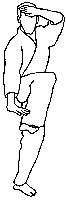
| Rohai |
Tomari |
Silent,
powerful, explosive movements, as those of a crane.
One-legged stance. |
Sho-dan
(black belt)
May be started 1-2 years after Wankan. |
| Wanshu |
Wanshu
China, late 1600's
|
Chinese
roots. Hidden fist. |
Sho-dan
(black belt)
May be started 1- 2 years after Rohai. |
| Passai |
Chotoku
Kyan
Shuri, early 1900's |
Breaking through or away as when ambushed. Full commitment. Power
generated by quickness in movements. Knife hand techniques. |
Ni-dan
(2nd deg. black belt)
May be started 1 -2 years after Wanshu. Student assumes greater responsibility for mentoring students and
assisting in running the dojo. Begins to demonstrate proficiency in weapons
kata. |
| Chinto |
Chinto
early 1800's
|
Serious
fight to the death for spiritual recognition. No spectators.
Performed in a straight line; flying kick. |
San-dan
(3rd deg. black belt) May be started 2 -3 years after
Passai.
Student earns the title "Sensei" (teacher). Has cultivated a
substantial following of students at all ranks. Formulates
plans to open a school or club. |
| Gojushiho |
Anonymous |
Amended
royal Okinawan folk dance. 54 steps. Many subtle,
diversified movements; spear hand thrusts. |
Yon-dan
(4th deg. black belt) May start Gojushiho 3 years after
Chinto.
Student continues to probe the subtleties of the black belt kata,
incorporating their strength and beauty. Renews his/her willingness to
learn. Sets out to propagate the art of Shorin-ryu. |
| Kusanku |
Kusanku
China, mid 1700's |
Chinese
roots. Most advanced kata. Reserved only for serious black
belts who have trained 30 or more years. |
Roku-dan
(6th deg. black belt). Requires permission from Hanshi.
Student continues to strive to perfect karate skills both old and new.
Embraces the spiritual aspects of karate-do and endeavors to
foster its many benefits in the community at large. |